

Table of Contents
TogglePlanning a backyard <a href="https://kleanhandsanitizer.com/shed-landscaping-ideas/”>landscaping project without knowing the costs is like starting a renovation without measuring twice. Whether you’re dreaming of a cozy patio, a lush lawn, or hardscaping features, understanding backyard landscaping cost upfront keeps surprises off your invoice. Costs vary wildly, from under $1,000 for basic lawn care to $15,000+ for full yard transformations, depending on your project type, location, and whether you’re hiring pros or going the DIY route. This guide breaks down real 2026 pricing so you can plan confidently and avoid budget blunders.
Key Takeaways
- Backyard landscaping cost varies widely from under $1,000 for basic lawn care to $15,000+ for complete yard transformations, with the largest expenses typically being labor, materials, and project size.
- Sod installation runs $0.30–0.80 per square foot, patios cost $8–18 per square foot, and outdoor structures like decks and irrigation systems can add $1,500–5,000+ to your total project budget.
- Geographic location, seasonal timing, and soil preparation significantly impact pricing—urban areas charge 30–50% more, while fall and winter projects offer 10–20% discounts compared to spring peak season.
- Get three professional quotes with itemized labor and materials, build a 10–15% contingency buffer, and consider phasing projects over multiple seasons to manage cash flow and avoid budget surprises.
- Save 40–60% on labor costs through DIY work on sod laying and mulching, choose budget-friendly native plants and materials, and negotiate discounts by scheduling projects during contractor off-seasons.
Factors That Impact Landscaping Costs
Before you start pricing, know what actually moves the needle on your landscaping bill. Project size matters most, a 500-square-foot patio costs far less than a full acre renovation. Materials are another big one. Bulk mulch runs $20–40 per cubic yard, while decorative hardscape stone jumps to $75–150 per ton. Labor is often the largest expense: professional landscapers charge $50–150 per hour depending on your region and their experience.
Your geographic location affects everything. Urban areas and regions with high cost of living see 30–50% higher quotes than rural zones. Soil condition and site prep also drive costs up: if your yard has poor drainage, compacted soil, or debris removal needs, expect to budget extra.
Seasonal timing shifts prices too. Spring and early summer demand peaks, so contractors charge premium rates. Fall and winter often bring 10–20% discounts. Finally, permit requirements for structures like retaining walls or irrigation systems add $200–500 in administrative costs and inspection fees. Check with your local building department before starting major hardscape work.
Average Landscaping Costs By Project Type
Lawn Installation and Maintenance
A fresh lawn doesn’t come cheap. Sod installation (laying mature grass) runs $0.30–0.80 per square foot, meaning a 5,000-square-foot yard costs $1,500–4,000 installed. Seeding is cheaper, $0.05–0.15 per square foot, but takes 3–4 weeks to mature and needs consistent watering. According to HomeAdvisor’s cost data, professional landscaping averages around $3,517 overall, with lawn work representing a significant chunk.
Routine maintenance adds up annually. Mowing, edging, and basic care run $30–80 per visit, and most yards need service every 7–10 days during growing season. That’s roughly $600–1,600 per year. Aeration and overseeding (recommended yearly) cost $100–300. If you’re dealing with thatch buildup or compacted soil, budget an extra $150–250 for specialized treatments.
Hardscaping and Outdoor Structures
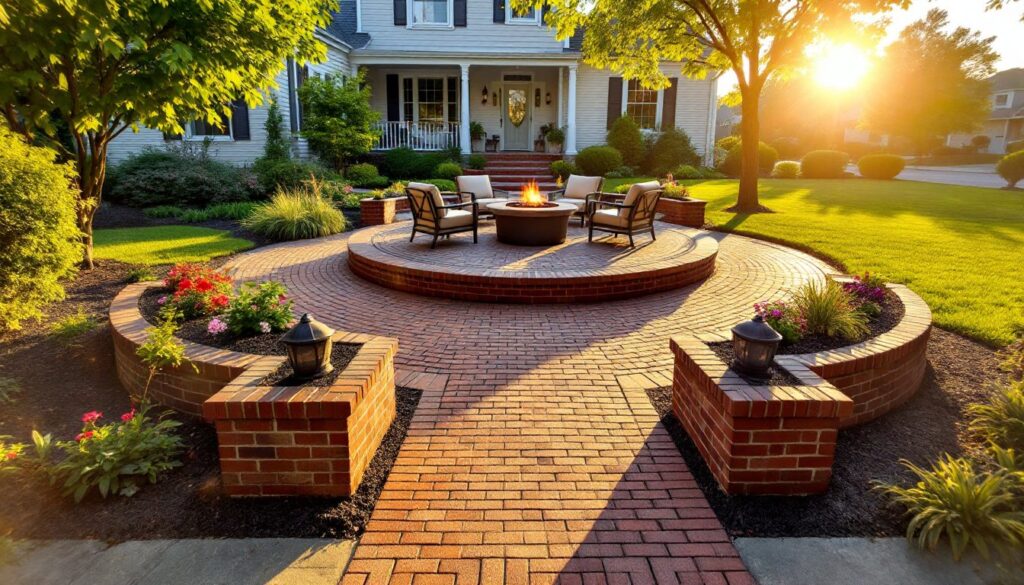
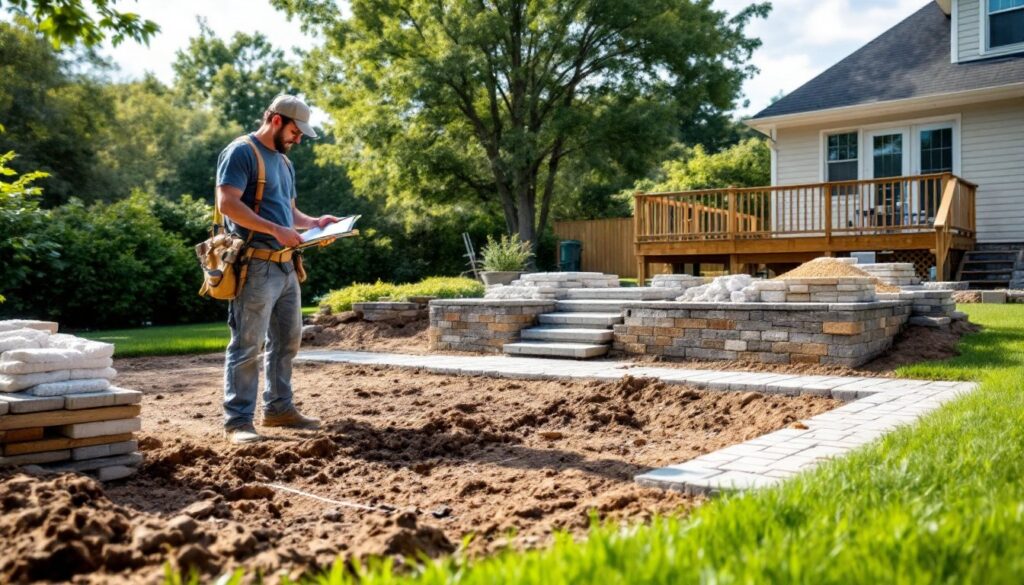
Patios, walkways, and retaining walls are where budgets expand rapidly. A patio installation using stamped concrete runs $8–18 per square foot, so a 400-square-foot space costs $3,200–7,200. Permeable pavers are pricier at $12–25 per square foot but offer drainage benefits. Natural stone (flagstone, travertine) hits $15–30+ per square foot.
Retaining walls vary wildly. A simple timber wall costs $10–15 per linear foot, while engineered stone or block walls jump to $25–50 per foot. A 50-foot wall could run $1,250–2,500 in materials and labor combined. Angi’s 2026 landscaping cost data shows backyard hardscape projects averaging $3,000–8,000 when professionally installed.
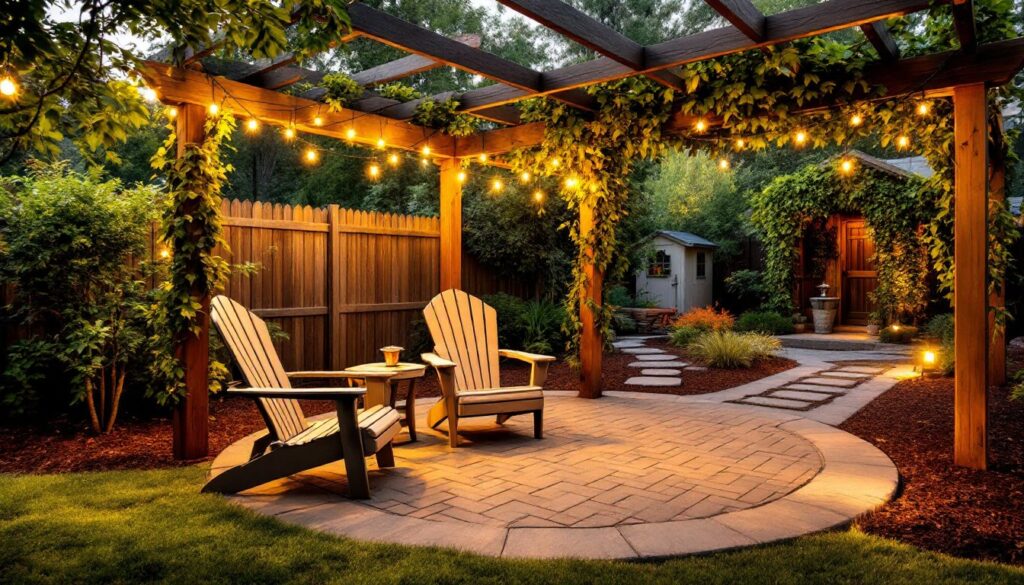
Outdoor structures push costs higher. A pressure-treated deck runs $15–30 per square foot installed. A pergola or gazebo adds $1,500–5,000+. Raised garden beds, if DIY, cost $50–150 each: professionally built, double that. Irrigation systems (sprinklers, drip lines) range from $1,500–5,000 depending on yard size and automation level. Landscape lighting adds another $500–3,000 for professional installation with trenching and wiring.
How To Budget For Your Backyard Project
Start by defining your scope. Sketch your yard and mark what you want to change, just grass? Add a patio? Both? Write down materials and the square footage involved. This clarity prevents scope creep, the silent wallet-killer.
Get three quotes from licensed contractors. Explain your vision clearly, ask what’s included (site prep, debris removal, follow-up maintenance), and watch for lowball bids, they often signal inexperience or hidden costs later. A professional estimate should itemize labor, materials, and a timeline.
Build a contingency buffer of 10–15% into your total budget. Unexpected finds (underground rocks, poor drainage, utility lines) are common and can derail finances fast. If you’re planning residential landscaping on a tighter timeline, seasonal pricing matters, book fall or winter work for better rates.
Consider phasing projects. Instead of a $15,000 complete overhaul, install the patio this spring ($5,000), add planting beds next fall ($3,000), and tackle hardscaping the following year. Spreading costs over 2–3 seasons eases cash flow and lets you refine your vision as you go.
Ways To Reduce Your Landscaping Expenses
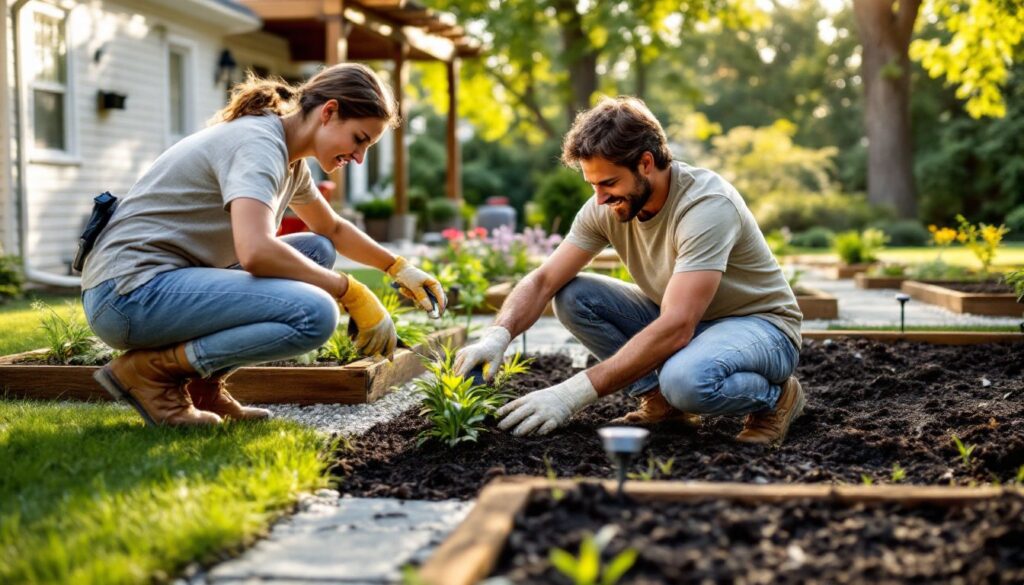
The biggest savings come from sweat equity. DIY sod laying, mulching, and planting cuts labor costs by 40–60%. You’ll need basic tools (shovel, wheelbarrow, gloves, safety glasses), but YouTube tutorials make it doable for most homeowners. Save contractor time for skilled work like hardscape installation or irrigation, mistakes there cost more to fix.
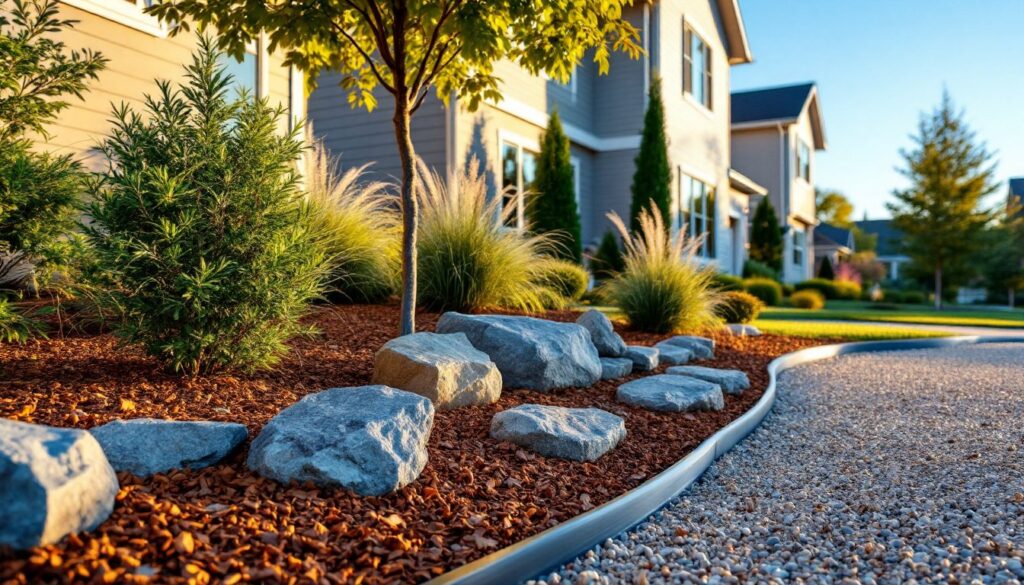
Choose budget-friendly materials. Mulch (wood chips or bark) costs a fraction of decorative stone for ground cover. Native plants are cheaper than ornamental varieties and need less water and maintenance. Landscaping on a budget doesn’t mean boring, focus on structure and greenery first, add ornamental touches later as budget allows.
Buy materials in bulk. Ordering landscape rock, soil, or mulch from a landscape supply yard instead of a big-box retailer saves 20–30% per cubic yard. Some suppliers offer free delivery on orders over a certain amount.
Time your project right. Request quotes in fall or winter when contractors have slower schedules and negotiate 10–20% discounts. Avoid spring peak season unless you must.
Rethink your hardscape design. A stamped concrete patio looks great but costs more than basic broom-finish concrete, which is still attractive and saves $3–8 per square foot. Gravel walkways cost nearly nothing and can be refreshed later. Landscaping gravel types offer surprisingly stylish options for pathways and edging on a shoestring budget.
Postpone irrigation automation. A basic soaker hose setup costs $50–100 and waters efficiently: upgrade to smart irrigation when you have more budget available.
Conclusion
Backyard landscaping costs run the gamut, but understanding what drives those numbers, materials, labor, location, and scope, lets you plan smart. Whether you’re investing $2,000 in a new lawn or $10,000 in a full yard transformation, get multiple quotes, phase projects if needed, and don’t skip prep work. The real value comes when your budget aligns with your vision and timeline.