

Table of Contents
ToggleLas Vegas summers push beyond 110°F, and water restrictions are part of life in the Nevada desert. But harsh conditions don’t mean your backyard has to look barren. The secret to thriving Las Vegas backyard landscaping isn’t fighting the climate, it’s embracing it. Smart plant choices, strategic hardscaping, and efficient irrigation can transform your outdoor space into a low-maintenance oasis that actually survives the heat. This guide walks you through the specific techniques and materials that work in the Mojave Desert, so you can create a beautiful yard without constant upkeep or sky-high water bills.
Key Takeaways
- Las Vegas backyard landscaping thrives by embracing the desert climate with native plants, drip irrigation, and strategic hardscaping rather than fighting harsh conditions.
- Native desert plants like Desert Marigold, Apache Plume, and Agave require minimal water and maintenance once established, making them ideal for reducing water bills in Nevada.
- Drip irrigation systems use 30–50% less water than overhead sprinklers and can be installed as a DIY project for $80–150, delivering water directly to plant roots while keeping foliage dry.
- Hardscaping elements like decomposed granite pathways, light-colored pavers, and pergolas provide essential shade while reducing surface temperatures by 20–30°F in intense Las Vegas summers.
- Group plants by water needs (hydrozoning) to reduce waste—place water-hungry plants together and drought-proof species at yard edges to simplify maintenance and conserve resources.
- DIY projects like mulched planting beds, decomposed granite pathways, and shrub borders can transform your entire yard gradually over a year or two without the expense of hiring full landscaping contractors.
Understanding Las Vegas Climate and Desert Landscaping Basics
Las Vegas sits in the Mojave Desert with annual rainfall averaging just 4 inches. Summer temperatures regularly exceed 105°F, while winter nights can dip below freezing. Soil here is typically alkaline, compacted, and mineral-heavy, the opposite of what most traditional plants prefer.
Survival in this climate means choosing plants adapted to extreme heat and dry conditions, and spacing them to reduce water demand. Nurseries in the area stock plants proven to handle these extremes: creosote bushes, desert marigolds, and various cacti thrive with minimal care once established.
Before planting anything, test your soil pH and drainage. Desert soil often compacts easily, preventing water penetration. Break up the top 8–12 inches and amend with compost if you’re planning planting beds. This single step prevents waterlogging and root rot. Also account for seasonal wind, Las Vegas averages 8.5 mph year-round, which increases evaporation and damages delicate foliage. Position taller plants or hardscape elements as windbreaks when planning your layout.
Native Plants That Thrive in the Nevada Desert
Native plants are your best friend in Las Vegas landscaping. They’ve adapted to local conditions over millennia and require less water, fertilizer, and maintenance than non-natives.
Desert Marigold and Desert Marigolds bloom almost year-round with minimal water once established. Four O’Clock plants produce evening flowers and self-seed, reducing replanting costs. Apache Plume offers feathery seedheads in late summer and tolerates extreme heat. Desert Willow grows as a large shrub or small tree, providing filtered shade and attractive flowers in summer.
For groundcovers, Desert Zinnia spreads quickly and blooms prolifically. Creeping Rosemary adds texture and fragrance while surviving on rainfall alone after establishment. Native plants incorporate these varieties as focal points, not afterthoughts.
Cacti and succulents are obvious choices, but most homeowners overlook smaller varieties. Hedgehog Cactus stays compact, while Barrel Cactus grows slowly but provides architectural interest. Agave varieties tolerate poor soil and require virtually no water once settled in.
Drought-Tolerant Shrubs and Ground Covers
Desert Broom and Rabbitbrush are fast-growing shrubs for quick privacy or windbreaks. Both tolerate poor soil and establish quickly. Brittlebush handles rocky, marginal areas where other plants fail. Rosemary (not just creeping types) reaches 3–4 feet and produces usable foliage for cooking or herbal uses.
For shade, Texas Privet and Desert Ash work as small trees. Neither requires much water after year one. Chiltepin (a wild chili pepper) grows 3–6 feet, produces edible fruit, and tolerates heat that kills most other plants.
Group plants by water needs (hydrozoning). Put heavier feeders near irrigation, and drought-proof plants at the yard’s edges. This reduces waste and simplifies maintenance. Most native shrubs need supplemental water only during establishment (the first 6–12 months): after that, desert rainfall and seasonal storms usually suffice.
Water-Wise Irrigation and Maintenance Strategies
Overhead sprinklers waste water in the desert: wind carries mist away, and heat evaporates moisture before it soaks in. Drip irrigation, which delivers water directly to plant roots, uses 30–50% less water than sprinklers while keeping foliage dry (reducing disease).
Soaker hoses are the budget option. Lay them in planting beds, cover with mulch, and connect to a standard faucet. Cost is under $50 per 100 feet, and they work reliably for five-plus years. Emitters (small barbed nozzles) clamp onto hoses for precise watering of individual plants.
Drip line systems (half-inch tubing with in-line emitters spaced 12–24 inches apart) are more durable and cleaner-looking. A basic system costs $100–300 to install yourself: professional installation runs $400–800 depending on yard size. Both types integrate easily with battery-operated timers, so watering happens at dawn (reducing evaporation and wind interference).
Smart Watering Systems and Conservation Tips
Smart controllers adjust watering based on soil moisture sensors or local weather. Rachio, Orbit, and similar brands cost $50–200 but save water (and money) by skipping irrigation after rain or during cool snaps. Nevada’s Division of Environmental Protection recognizes these systems and sometimes offers rebates.
Water deeply but infrequently. Light, daily watering encourages shallow roots and weak plants. Instead, soak plants thoroughly every 2–3 days during summer, then taper off as they establish. Most native plants need supplemental water only June through September in Las Vegas: October through May, natural rainfall suffices.
Mulch is critical. A 2–3 inch layer of wood chips or small gravel around plants slows evaporation, moderates soil temperature, and suppresses weeds. Avoid volcano mulching (piling mulch against the trunk), it traps moisture and causes rot. Keep mulch 3–4 inches away from woody stems.
Cluster water-hungry plants (if you keep any non-natives) near a dedicated zone, so you’re not overwatering drought-proof plants. Smart landscaping separates water zones by demand: turf/vegetables in one zone, shrubs in another, and cacti in a third. This approach conserves water and reduces maintenance headaches.
Hardscaping Elements: Creating Structure and Shade
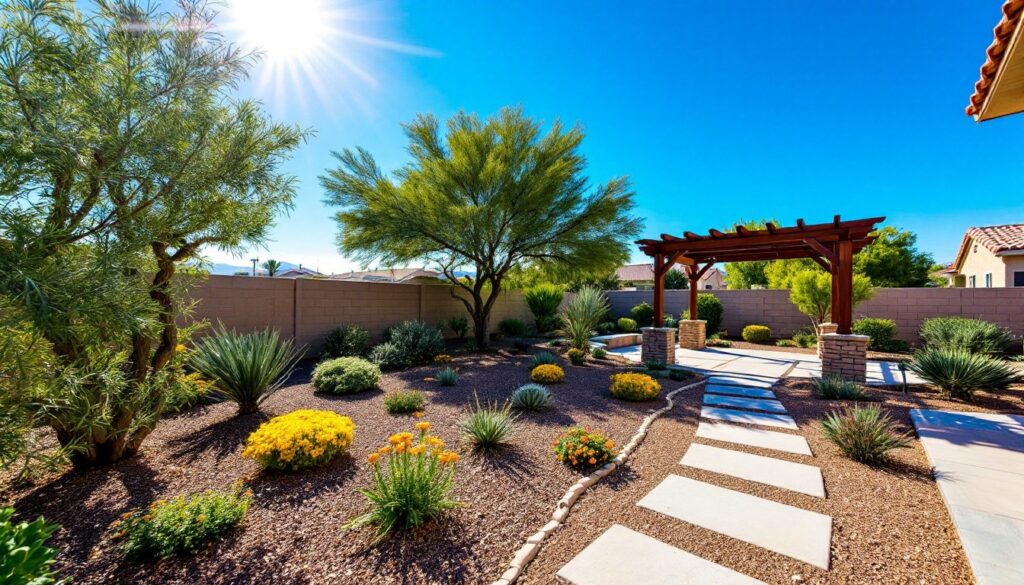
Hardscaping, patios, walls, pathways, and pergolas, defines your backyard and provides essential shade. In Las Vegas, shade is luxury: it reduces surface temperatures by 20–30°F and makes outdoor spaces usable during summer.
Decomposed granite (DG) is the desert standard for pathways and base layers. It’s inexpensive ($20–40 per ton), compacts to a solid surface, and looks natural. Use 2–3 inches compacted over landscape fabric to prevent weeds and keep DG stable.
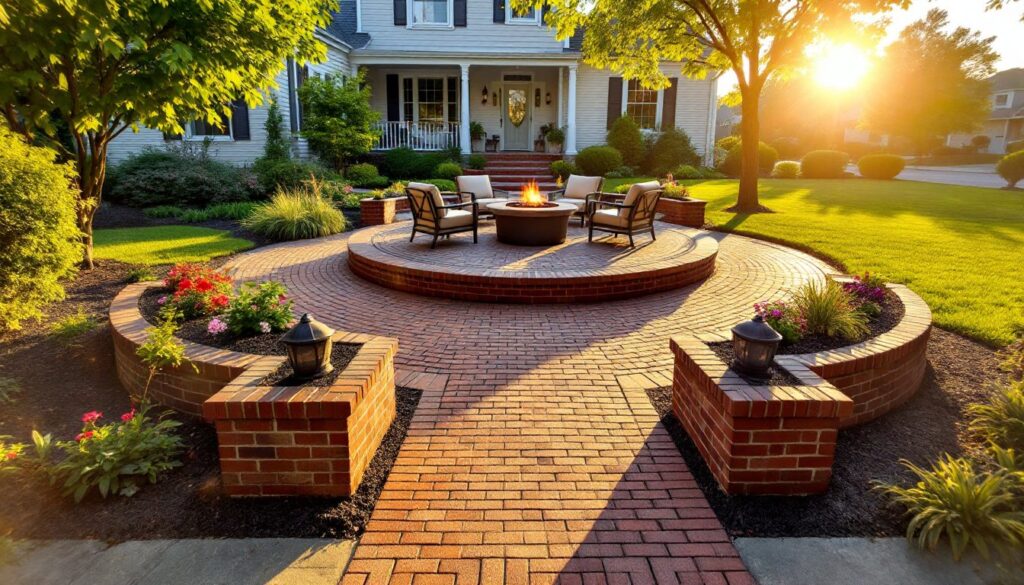
Flagstone and pavers cost more ($5–15 per square foot installed) but last decades. Light-colored stone reflects heat better than dark asphalt or dark pavers. Leave 1–2 inches between pavers for sand or DG, allowing drainage and root expansion in nearby plants.
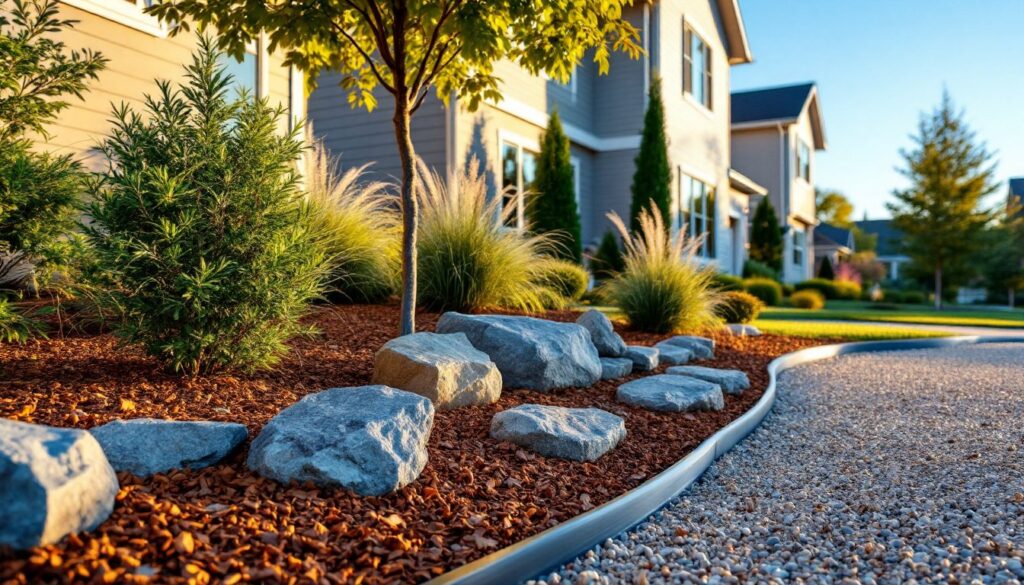
Mulch made from darker materials (like dark bark chips) absorbs heat and isn’t ideal in direct sun. Stick with lighter mulches or gravel in high-sun areas. If you want the darker look, apply mulch under shade structures or in plant clusters where it won’t radiate heat onto adjacent areas.
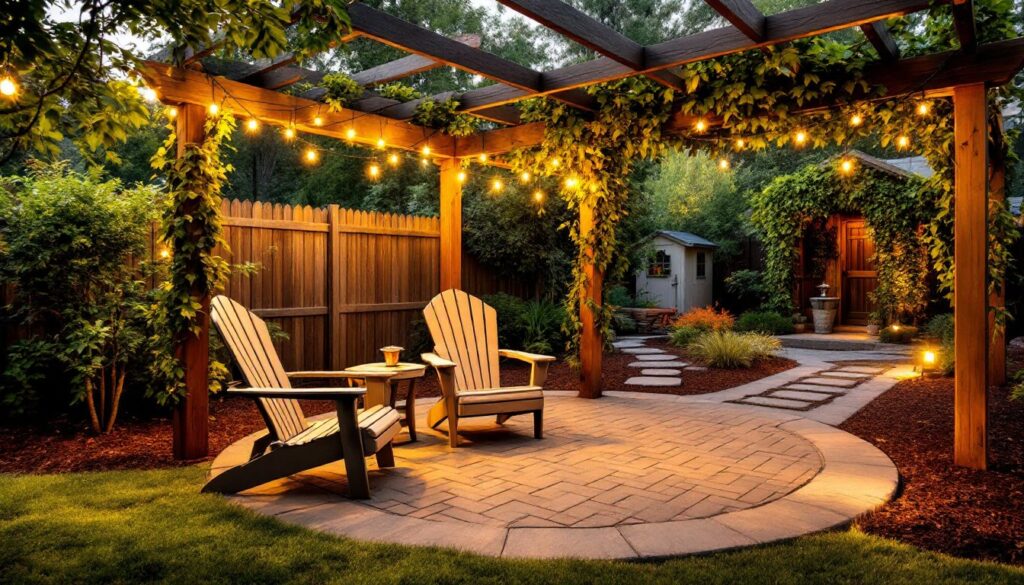
Pergolas and shade structures aren’t permanent hardscape, but they’re essential in Las Vegas. A 10×10 foot pergola kit runs $300–600 and blocks 50–70% of sun while allowing airflow (crucial for avoiding heat traps). Position pergolas over seating areas or high-traffic pathways. You can grow climbing desert plants like Purple Heart or Desert Vine through a pergola for additional summer cooling.
Retaining walls and rock outcrops add dimension and define planting areas. Use local stone (like red sandstone) when possible, it blends naturally with the landscape. Dry-stacked rock (no mortar) drains well and is easier for DIYers to install. A 2-foot-tall, 20-foot-long rock wall costs $400–800 in materials and a weekend of physical work. For structural walls over 3 feet, consult a professional, retaining wall failures are costly.
Budget-Friendly DIY Landscaping Projects for Your Backyard
You don’t need a contractor to transform your yard. Many Las Vegas landscaping improvements are DIY-friendly and deliver immediate impact.
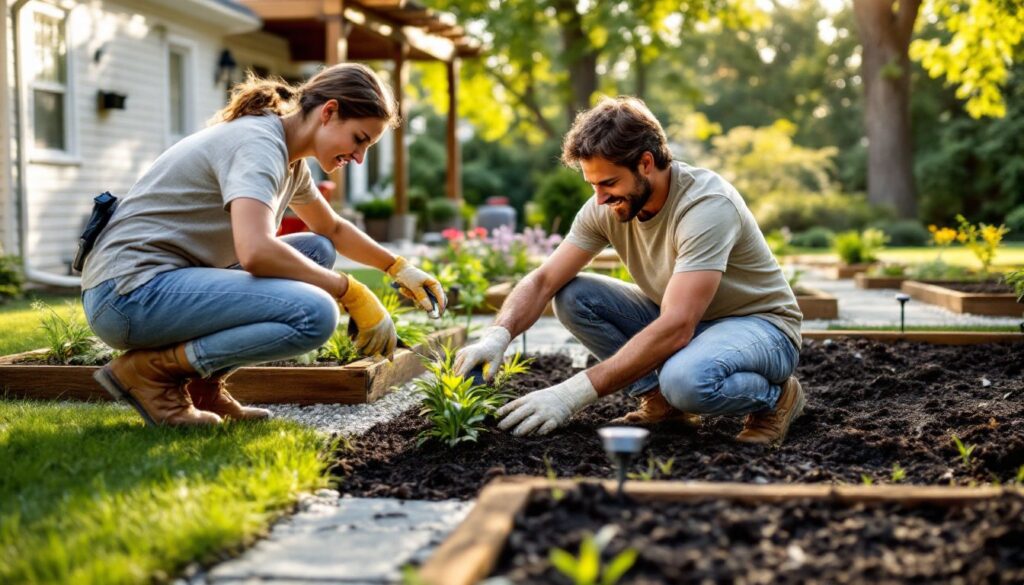
Create a mulched planting bed in one afternoon. Mark the outline with spray paint, use a flat shovel to edge it (cutting through grass cleanly), and remove sod. Lay down landscape fabric (prevents weeds while allowing water through), add 2–3 inches of mulch, and plant natives. One 4×8 bed costs $30–50 in materials and looks professionally finished. This is where you’d start if your yard is mostly lawn and you want to reduce mowing.
Build a simple decomposed granite pathway without digging. Outline your path with landscape edging (steel or plastic, ~$1–2 per linear foot), fill with 2 inches of compacted DG, and top with a light raking. It’s clean, functional, and costs under $50 for a 3-foot-wide, 20-foot path. Water it lightly after spreading DG to help it compact: a hand tamper ($20) firms it further.
Install a drip irrigation system yourself using soaker hoses and timers. Lay hoses along planting beds, stake them with landscape pins ($0.25 each), attach a timer to your faucet, and you’re done. Total cost: $80–150 for a 500-square-foot area. This saves water and keeps foliage dry, reducing disease.
Stake out and plant a shrub border to define spaces or block sightlines. Choose 3–5 native shrub varieties, space them 3–4 feet apart (they’ll fill in), and water weekly for two months while they establish. A 30-foot border with five shrubs costs $100–200 in plant material and creates an instant windbreak. This approach ties into screening utility areas when needed.
Add gravel to existing beds for a quick refresh. Remove dead plants, spread landscape fabric, add 3 inches of light-colored gravel, and rock around plant bases. Gravel doesn’t decompose like mulch, so maintenance is minimal. A 100-square-foot bed costs $30–60 to regrave every 2–3 years.
Most of these projects require only basic tools: shovel, rake, level, and edging shears. Skip the fancy equipment, your time is the main investment. Many homeowners complete one or two bed installations per season, gradually converting their entire yard over a year or two without the sticker shock of hiring a full landscaping overhaul.