



Table of Contents
ToggleBrick isn’t just for fireplaces and patios anymore. When it comes to front yard landscaping, brick is a game-changer, durable, versatile, and surprisingly affordable compared to poured concrete or natural stone. Whether you’re looking to add definition to flower beds, create welcoming pathways, or build an outdoor living space, brick delivers solid curb appeal that lasts for decades with minimal fuss. In this guide, we’ll walk you through seven proven brick landscaping designs that’ll transform your front yard from forgettable to fantastic.
Key Takeaways
- Front yard brick landscaping ideas offer durability and visual appeal that improve curb appeal for decades while costing less than poured concrete or natural stone.
- Brick pathways using running bond, herringbone, or basket weave patterns define your landscape and create an inviting approach to your front door.
- Raised brick planting beds elevate flower gardens 8–12 inches, making weeding easier and improving drainage without requiring mortar for simple stacked designs.
- Brick patios require proper base preparation with 4 inches of compacted gravel and a 1–2 inch sand layer, plus edge restraints to prevent shifting over time.
- Budget-friendly brick landscaping works by using brick strategically for high-visibility focal points like pathways and mailbox areas while filling secondary zones with gravel or mulch.
- Low maintenance brick landscapes stay pristine with twice-yearly cleaning, and mortared joints require inspection and repointing every 2–3 years to extend lifespan 20+ years.
Why Brick Is the Perfect Landscaping Material
Brick earns its place in front yards for good reason. It’s weather-resistant, handles freeze-thaw cycles better than many materials, and actually looks better as it ages, developing a natural patina that adds character. Unlike pavers that can shift or crack unpredictably, standard building bricks hold their position when laid on a proper sand or mortar base.
The versatility is real. You can use the same modular brick (typically 3⅝” × 2¼” × 8″) for pathways, borders, and patios without hunting down specialty products. Brick also blends seamlessly with existing home exteriors, whether your house is traditional or contemporary, there’s a brick color and texture that works.
From a maintenance angle, brick is forgiving. A good broom-and-hose cleaning twice a year keeps them looking fresh, and individual bricks are replaceable if one cracks. Compare that to concrete, which requires patching, or pavers, which can develop ugly weed lines. Bricks for Landscaping: Transform Your Outdoor Space with Creative Ideas explores this durability factor in depth, showing why smart homeowners keep returning to brick.
Classic Brick Pathway Designs for Your Front Yard
A brick pathway transforms a plain lawn into an inviting approach. The path draws the eye toward your front door, defines the landscape, and provides a safe, level surface in wet weather. Most homeowners use standard running bond (offset brick rows) for simplicity and clean aesthetics.
Herringbone and Basket Weave Patterns
If running bond feels too plain, herringbone and basket weave patterns deliver visual interest without complexity. Herringbone alternates bricks at 45-degree angles in a V-shaped pattern, which actually makes the path feel wider and adds directional movement. Basket weave pairs bricks perpendicular to each other in 2×2 squares, it’s eye-catching but requires careful planning on the edges.
Here’s the honest truth: herringbone looks stunning but demands more prep work. You’ll need sharp cuts on edge bricks, a wet saw with a masonry blade is essential for clean angles. Budget extra time for layout and double-check measurements before cutting, since wasted brick adds up quickly. Small Front Porch Landscaping Ideas to Transform often incorporate these patterned pathways as a foundation for porch-adjacent designs.
Creating Raised Planting Beds with Brick Borders
Raised beds frame plants and create visual structure that a flat landscape can’t match. Brick borders elevate flower beds 8–12 inches (no mortar required if you’re using a simple stacked design), making weeding easier and improving drainage around moisture-sensitive plants.
Construction is straightforward: lay bricks in a simple running bond around the perimeter, and you’re done. For stability, dig down slightly so the bottom course sits partially buried. If you’re building higher beds (16+ inches), consider concrete footings or adding a landscape fabric barrier on the interior to prevent soil washout. Avoid using mortar for short, temporary borders, it’s easier to adjust or rebuild later without scraping concrete.
One practical note: brick borders perform best on level ground. If your slope is steeper than 5–10%, you’ll need tiered beds or a professional grading plan. Avoid stacking bricks higher than four or five courses without reinforcement, as lateral soil pressure can push them outward. Fill the interior with quality topsoil and a 3–4 inch mulch layer to complete the look and suppress weeds.
Brick Patio and Entertaining Spaces
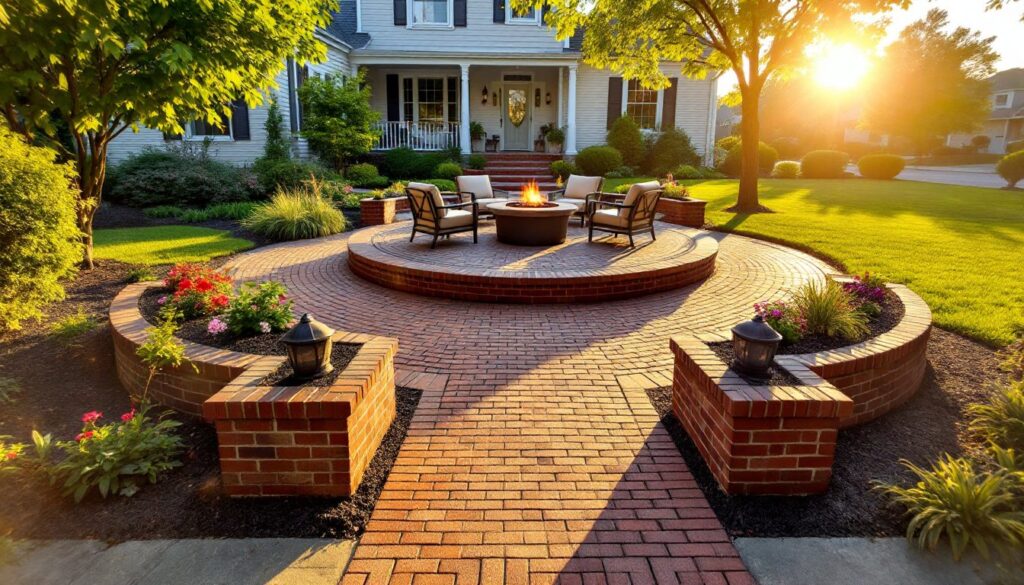
A brick patio anchors your front yard entertaining zone, think a 12×16 foot space for seating, a fire table, or a small bistro setup. Unlike pathways, patios demand proper base preparation: 4 inches of compacted gravel, a 1–2 inch sand leveling layer, and well-fitted bricks with ⅜ inch mortar joints (or sand-set if you prefer a cleaner look without mortar).
Mortar joints create a finished, permanent appearance but require pointing and sealing every few years. Sand-set bricks feel more casual and allow water to drain through, but they shift under heavy furniture, less ideal if you’re placing a grill or permanent seating. Patio Landscaping Ideas: Transform digs deeper into base preparation and edging strategies.
Edging matters. Install a plastic or metal border along the perimeter to prevent bricks from creeping outward over time. A common mistake is running mortar all the way to the soil edge without a proper edge restraint, the patio splays out within two years. Budget extra time for compacting the base: most DIY failures stem from rushing this step.
Budget-Friendly Brick Landscaping Tips
Brick costs vary wildly by region and quality. Reclaimed brick runs $1–3 per brick, while new standard red brick averages $0.50–$1.50. A 100-square-foot patio at standard spacing consumes roughly 450–500 bricks, so material costs range from $225–$750 before labor or base prep.
To stretch your budget, mix materials. Use brick only for high-visibility pathways or focal points (around the mailbox, flanking the entry), and fill secondary areas with gravel or mulch. You’ll get impact where it counts. Landscaping Driveway Ideas That illustrates how strategic brick placement multiplies visual effect without overdoing it.
Another hack: buy seconds or surplus stock from local suppliers. One-day sales at home centers sometimes drop prices 15–25% when they’re clearing overstock. And honestly, reclaimed brick from salvage yards looks incredible in cottage or traditional settings, the irregular wear adds authenticity that new brick can’t match.
Maintenance and Long-Term Care for Brick Landscapes
Brick’s low-maintenance reputation is mostly deserved, but “low” doesn’t mean “none.” Sweep and hose down brick features twice yearly, spring and fall work best. This removes moss, algae buildup, and debris that can trap moisture.
For mortared installations, inspect joints every 2–3 years. If mortar is crumbling or cracking, repoint it with new mortar that matches the original color. This extends patio and pathway life by 20+ years. Sand-set borders need occasional raking and releveling, especially after winters in freeze-thaw zones, just reset any sunken or shifted bricks and top off sand as needed.
Safety tip: wear gloves, safety glasses, and a dust mask when cutting brick or cleaning old mortar, as silica dust is a respiratory hazard. Use a wet saw rather than a dry grinder to minimize dust exposure. If you’re dealing with structural repairs, efflorescence (white powder on brick), or severe cracking, call a mason, it’s not a beginner DIY task and problems can accelerate if mishandled. Regular cleaning and minor touch-ups keep brick landscapes looking polished for decades.