

Table of Contents
ToggleWhether you’re monitoring a sprawling backyard, a rural driveway, or a large property perimeter, a standard security camera just won’t cut it. Long range WiFi security cameras deliver the coverage you need without running cable across your entire property. They’ve evolved significantly over the past few years, better sensors, sharper optics, and smarter software mean you can now capture clear footage from 100+ feet away. This guide walks you through what separates the best long range options from the mediocre, what features actually matter, and how to position them for maximum effectiveness.
Key Takeaways
- A best long range wifi security camera combines optical zoom (4x–8x), a large sensor (1/2-inch or larger), and a wide aperture (low f-number) to capture clear footage from 100+ feet away.
- 4K resolution paired with optical zoom lets you frame wide views and zoom in during playback to catch details without losing sharpness, making it superior to 2K for distance monitoring.
- Infrared night vision reaches 100–150 feet effectively, while color night vision provides crisper face and license plate detail in darkness at the cost of slightly reduced range.
- Proper WiFi signal strength (above –67 dBm) and strategic camera placement at 8–10 feet high are critical—even the best long range camera fails with weak connectivity or poor positioning.
- Expect to invest $200–$500 for a solid 4K long range camera with reliable performance, while premium models with advanced zoom and dual sensors cost $500–$1,000+.
- Multiple strategically positioned mid-range cameras often deliver more usable coverage and redundancy than a single ultra-long-range unit struggling to monitor extreme distances.
What Makes a WiFi Security Camera Long Range
Long range doesn’t just mean a fancy zoom lens. It’s a combination of factors: sensor size, optical zoom versus digital zoom, lens quality, and light sensitivity all work together to deliver useful footage from distance.
A proper long range camera uses an actual optical zoom (moving glass elements in the lens) rather than digital zoom, which crops and enlarges pixels and loses sharpness. Most genuine long range models offer 4x to 8x optical zoom, with some premium units reaching 10x or more.
Sensor size matters too. A camera with a larger sensor (typically 1/2-inch or larger) captures more light and detail, letting you see clearly even when the subject is far away. Smaller 1/4-inch sensors struggle in dim conditions and produce grainy footage when zoomed. Finally, lens quality, measured in aperture (the f-number, like f/2.0), determines how much light reaches the sensor. A lower f-number means a wider aperture and better low-light performance. When you’re watching something 150 feet away, every bit of optical advantage counts.
Key Features to Look For in Long Range Cameras
Beyond zoom, several critical features separate capable long range cameras from pretenders. Frame rate, bitrate, and stabilization all impact how useful your footage actually is when you need to identify someone or read a license plate.
Night Vision and Infrared Technology
Infrared (IR) LEDs illuminate subjects at night using light invisible to the human eye. Most long range cameras rely on passive IR, which is effective out to 100–150 feet depending on the number and quality of LEDs. Active infrared boosts range further but uses more power and can reflect off rain or fog, reducing clarity.
Some premium models now combine IR with white-light LEDs or color night vision (which uses image sensors tuned to see in low light without IR). Color night vision produces crisper detail than IR but typically doesn’t reach quite as far and demands higher bandwidth. Your choice depends on your lighting conditions and how much nighttime detail matters, if you need to read a face or plate in darkness, color night vision edges ahead: for pure detection range, IR wins.
Resolution and Zoom Capabilities
4K resolution (3840 × 2160 pixels) has become standard on mid-range and higher long range cameras. At distance, 4K lets you zoom in during playback to see details you might miss with 2K (2560 × 1440). Pair 4K with optical zoom and you gain real flexibility, you can frame the entire driveway, then zoom in to catch a detail without losing sharpness.
Frame rate also counts. 30 fps (frames per second) is standard: 60 fps produces smoother motion for moving subjects and makes it easier to catch fast action. For long distance footage, 30 fps is usually adequate, but if you’re monitoring high-speed entry points (like a rural road), 60 fps helps.
Look for mechanical image stabilization or electronic stabilization (EIS) in the firmware. Long zoom footage is prone to shake: stabilization keeps slight wind or vibration from turning your footage into a shaky mess. Some cameras offer both, mechanical stabilization for the optics and EIS in software.
Top Long Range WiFi Security Camera Options
The camera market shifts constantly, but certain models consistently deliver on long range performance. Reviews from outlets like Tom’s Guide break down 2026 models in detail, and most top contenders share common strengths: solid optical zoom, 4K resolution, reliable night vision, and stable WiFi connectivity even at distance.
When evaluating options, check the actual sensor size (not marketing spin about “megapixels”), aperture rating, and zoom type. Cross-reference real-world reviews, especially footage samples in low light, rather than spec sheets alone. CNET’s product reviews and Digital Trends frequently test outdoor cameras under varied conditions, so you’ll see how they perform in rain, twilight, and full darkness.
Expect to spend $200–$500 for a solid single long range camera with 4K, 4x optical zoom, and reliable IR. Premium models with 8x+ zoom, color night vision, or dual sensors run $500–$1,000+. Budget models under $150 often sacrifice zoom quality or sensor size, making them less suitable for true “long range” work.
One often-overlooked factor: local WiFi signal strength. Even the best camera won’t help if your router signal barely reaches the installation spot. If you’re placing a camera 150+ feet from your router, consider a mesh WiFi system or a dedicated WiFi extender near the camera. Weak signal causes lag, video buffering, and dropped connections, defeating the purpose of wireless installation.
Installation and Placement Tips for Maximum Range
Proper placement makes or breaks long range camera performance. Height, angle, and environmental obstacles all affect what you can actually see.
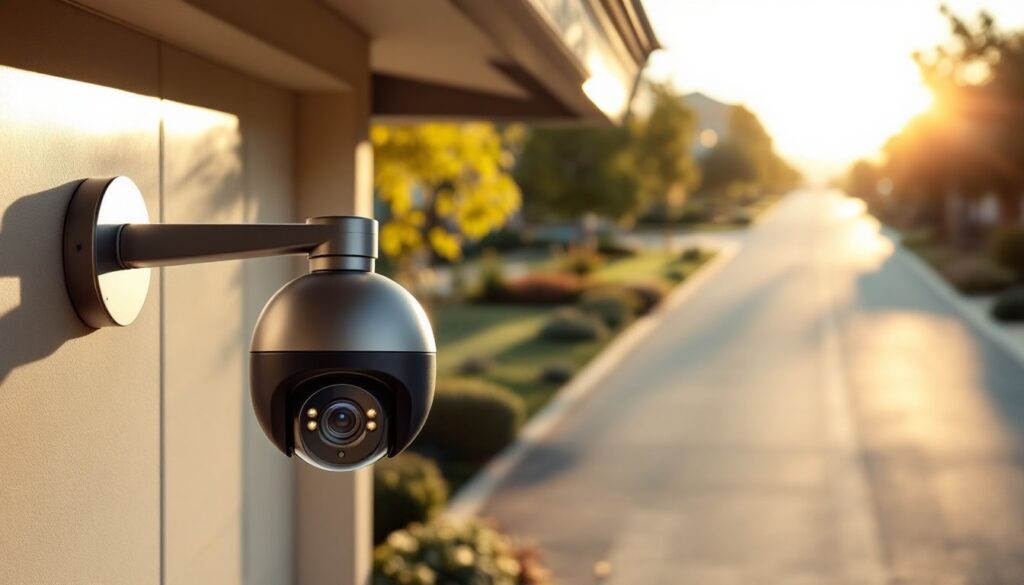
Mount at eye level or slightly higher on the target area. A camera aimed upward at the sky captures less useful detail than one looking slightly downward across your property. For a driveway, 8–10 feet high on a wall, garage, or post works well: this height gives you a good view down the drive without excessive sky in the frame.
Minimize obstructions. Trees, fences, and structures between the camera and the area being monitored reduce effective range. You don’t need a perfect line of sight, but dense foliage or solid barriers will degrade image quality and zoom usefulness. Trim branches if they’ll grow across the field of view.
Test WiFi signal before final mounting. Use your phone’s WiFi analyzer app to check signal strength at the proposed location. Anything above –67 dBm is acceptable: below –75 dBm and you’ll likely see lag and dropout issues. If signal is weak, reposition the router antenna, add a mesh node, or use a weatherproof WiFi extender.
Protect from weather. Even “weatherproof” cameras benefit from an eave, soffit, or small awning to shield the lens and body from direct rain and sun. Sun glare, especially low morning or evening sun, can wash out footage. A slight overhang or hood reduces glare without blocking the view.
Secure the mounting bracket firmly. Wind vibration at long zoom distances is visible in footage. Use stainless steel hardware in areas with salt air or high humidity: standard bolts rust quickly and can loosen. Tighten everything snugly and check after the first month.
For large properties, consider multiple cameras rather than one ultra-long-range unit. Two mid-range cameras positioned strategically often deliver more usable coverage than one camera struggling to see 300 feet. This also provides redundancy if one camera fails. Learn more about Home Security Cameras Installation best practices to ensure your setup is reliable and durable.
Conclusion
A quality long range WiFi security camera combines optical zoom, a large sensor, solid night vision, and smart placement to deliver clear footage from distance. Focus on actual specifications, sensor size, aperture, optical zoom type, rather than marketing claims. Spend time on placement and WiFi signal strength: these often matter more than raw camera specs. With the right camera and setup, you’ll have peace of mind knowing you can see what’s happening across your entire property, day or night.