




Table of Contents
ToggleRanch-style homes have clean lines, open layouts, and modest charm, but they can look flat and uninviting without thoughtful landscaping. Adding curb appeal to a ranch house isn’t about overcomplicating your front yard: it’s about using smart hardscaping, texture, and focal points to transform a basic exterior into something that stops neighbors in their tracks. Whether you’re selling soon or just want to enjoy your home more, strategic landscaping improvements deliver both visual impact and practical benefits. This guide walks you through the essential moves for boosting your ranch home’s curb appeal in 2026.
Key Takeaways
- Strategic hardscaping with clean lines and proper edging instantly transforms curb appeal for ranch house landscaping by creating structure that complements the home’s horizontal architecture.
- Layered plantings in three tiers—tall shrubs, mid-height perennials, and low groundcovers—prevent flat-looking yards while respecting the ranch home’s modest proportions.
- A focal point at your entry, such as a statement planter or uplit shrub, combined with fresh paint on your front door, draws attention and signals intentionality without requiring expensive upgrades.
- Low-maintenance, drought-tolerant plants like sedums, ornamental grasses, and native species reduce watering demands while delivering year-round color and texture.
- Consistent maintenance habits—weekly deadheading, monthly edging, and proper lawn height (2.5–3.5 inches)—make the difference between curb appeal that lasts and yards that deteriorate.
- Spring bulbs planted in fall clusters, summer perennials, and fall ornamental grasses provide three-season color impact that keeps your ranch home visually engaging throughout the year.
Define Your Space With Strategic Hardscaping
Hardscaping, the hardscape materials like pavers, gravel, stone, and edging, creates structure and defines your property’s bones. Ranch homes especially benefit from clean hardscape lines that echo their horizontal architecture.
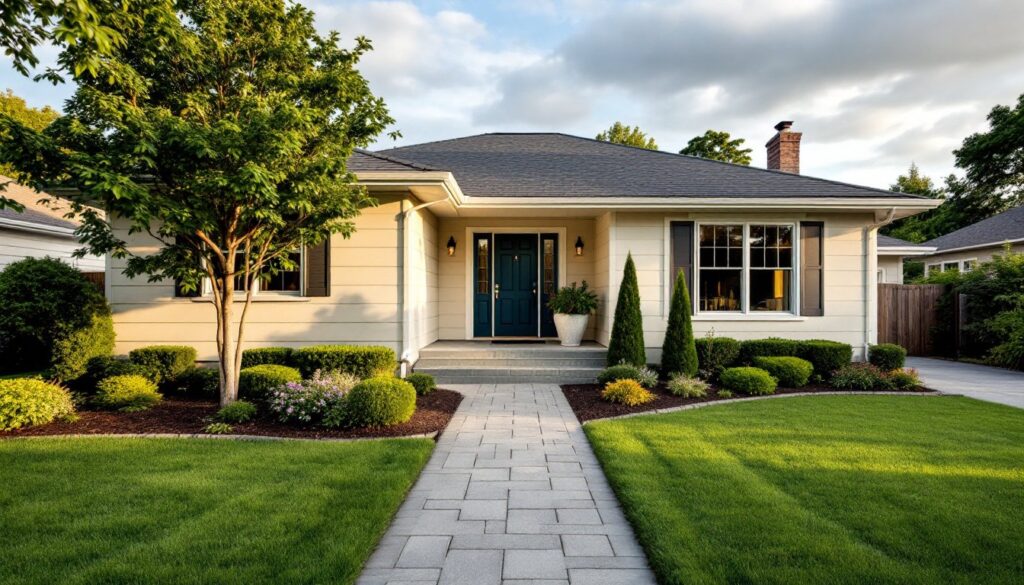
Start with your front walkway and entry path. A 6-foot-wide paver or stone walkway with clean edges draws the eye toward your front door and signals intentionality. Avoid narrow, weedy gravel paths: they read as neglected. Consider bricks for landscaping as a classic, durable choice that works with any ranch aesthetic.
Edging is underrated but essential. A steel or aluminum landscape edging separates planting beds from turf, preventing soil creep and keeping lines crisp. This single detail transforms a shaggy yard into one that looks maintained.
For level changes or sloped yards, retaining walls serve both form and function, they prevent erosion while adding visual dimension. A low retaining wall (18–24 inches) in stacked stone or timber creates architectural interest without overwhelming a ranch’s low profile.
Don’t underestimate your driveway landscaping ideas either: flanking your driveway entrance with planting beds and a clean apron of pavers ties the whole front together. Most ranch homes have driveways that dominate the front façade, so framing them well matters.
Choose Low-Maintenance Plants That Frame Your Home
Ranch homes work best with a layered planting scheme that respects the home’s horizontal proportions. Skip the oversized specimen trees that dwarf your roofline: instead, use smaller ornamental trees and structured shrubs.
Ornamental trees (15–25 feet tall at maturity) like serviceberry, redbud, or Calamagrostis grasses add height without mass. Plant one or two at the front corners to frame your entry without blocking the façade. Keep evergreen foundation plantings low and sculpted, boxwood, dwarf Alberta spruce, or compact junipers work well. Avoid thick, leggy shrubs that hide your home’s clean lines.
Perennials and groundcovers fill the middle layer. Drought-tolerant plants like sedums, coreopsis, ornamental grasses, and salvia require minimal watering and pruning. Residential landscaping on a budget thrives when you choose plants suited to your climate and water availability.
Create Visual Interest With Layering and Texture
Height variation and texture prevent a flat look. Layer your plantings in three tiers: tall shrubs or small trees (6–10 feet), mid-height perennials (2–4 feet), and low groundcovers or edging plants (under 2 feet). Mix fine and bold textures, ornamental grasses against larger-leafed shrubs, for example.
Foliage color matters as much as flowers. Variegated or chartreuse-leaved plants (like Physocarpus opulifolius ‘Diabolo’ or golden duranta) brighten a shady ranch entrance year-round. Incorporate native plants suited to your region: they’re naturally adapted and require less fussing. Check The Spruce for region-specific plant recommendations and planting guides tailored to your climate.
Upgrade Your Entryway With Lighting and Focal Points
Your front door is the hero: everything else should support it. If your ranch entry is set back or recessed, uplighting on the home’s façade draws attention. Path lights along the walkway (16–24 inches apart, spaced 3 feet from the path edge) improve nighttime navigation and security.
Uplighting trees or shrubs flanking the entry creates drama and depth, especially on a ranch’s often-flat front. Solar LED path and accent lights are affordable and maintenance-free: they’ve improved significantly since the early 2000s.
A focal point anchors the entry. This could be a statement planter (large, 20+ inches in diameter, in a coordinated color or material), a water feature, a sculptural rock or boulder landscaping, or architectural planters flanking the door. The key is one clear focal element, not a cluttered array.
Consider your front door color and hardware as part of the curb appeal picture. A fresh coat of paint on a contrasting door color (deep blue, charcoal, or forest green on a light ranch exterior) costs under $50 and makes a psychological difference.
Refresh Your Lawn Foundation
A healthy lawn frames everything. Patch bare or thin spots with quality grass seed matched to your region’s climate (cool-season or warm-season turf). Overseeding in fall (northern climates) or spring (southern climates) thickens turf and reduces weeds.
Mow at the right height: 2.5–3.5 inches for most cool-season grasses, 1.5–2.5 inches for warm-season types. Taller grass crowds out weeds and retains moisture. Dull mower blades shred grass: sharpen annually.
Edging between lawn and beds is non-negotiable. Use steel landscape edging or a clean cut line with a spade or edging tool every 3–4 weeks to keep turf from creeping into planting beds. This one maintenance habit makes your whole yard look twice as intentional.
If your ranch sits on an uneven lot, landscaping ideas for the side of house and backyard may include grading improvements. Avoid steep slopes near the foundation (they collect water and invite erosion): grade should slope gently away from the home.
Add Color and Seasonal Impact
Perennials and annuals inject personality without demanding constant fuss. Plan for three-season color: spring bulbs (tulips, daffodils), summer bloomers (coreopsis, rudbeckia, salvia), and fall ornamental grasses or mums.
Spring bulbs planted in fall create instant early-season curb appeal. Plant tulips and daffodils in groups of 5–7 at the front corners or base of entry shrubs. Mass plantings read bolder than scattered individual blooms.
For summer color, deadhead (remove spent flowers) weekly on perennials to extend bloom time. Annual flowers in pots near the entry refresh continuously without being permanently planted: swap them seasonally (spring pansies to summer petunias, then fall ornamental kale).
Fall interest comes from ornamental grasses, seed heads on perennials, and foliage color changes. Don’t rush to cut back plants in autumn: the structure and color sustain curb appeal through November.
Landscape maintenance is where many projects stumble. Establish a simple routine: weekly deadheading in summer, monthly edging, and an annual bed refresh in spring. Front-yard plantings need consistent attention to stay photo-ready, but it’s manageable if you plan for low-drama plants and realistic watering schedules. Resources like Gardenista offer inspiration and plant care guidance for sustained results.
Conclusion
Boosting curb appeal on a ranch home comes down to respecting its clean, horizontal character and adding intentional structure through hardscaping, layered plantings, focal points, and consistent maintenance. You don’t need a designer budget or years of gardening experience to transform your entry. Start with one section, a new walkway or refreshed planting bed, and build from there. Small, thoughtful changes compound quickly, turning a plain ranch into a neighborhood standout.