





Table of Contents
ToggleBuilding a backyard that thrives on minimal water doesn’t mean sacrificing beauty or design appeal. Xeriscape backyard ideas have evolved far beyond rock gardens and sparse plantings, they now encompass thoughtful design, native species, and creative hardscaping that turns your yard into a genuinely inviting outdoor space. Whether you’re facing water restrictions, climbing utility bills, or simply want a low-maintenance landscape, xeriscaping offers practical solutions that look good year-round. In 2026, homeowners are discovering that drought-resistant doesn’t mean dull. Let’s walk through how to design a xeriscape backyard that works for your climate, requires minimal irrigation, and actually looks like somewhere you’d want to spend time.
Key Takeaways
- Xeriscape backyard ideas reduce water usage by 30 to 75 percent while enhancing curb appeal through thoughtful design, native plants, and creative hardscaping.
- Select plants native to your USDA hardiness zone and climate, then cluster species with similar water needs into hydrozones to eliminate overwatering.
- Install drip irrigation on timers set for early morning or evening, which uses 50 percent less water than traditional sprinklers and prevents fungal disease.
- Apply 2 to 3 inches of mulch around plants to retain soil moisture, suppress weeds, and reduce maintenance while letting permeable hardscape features allow rainfall infiltration.
- Design your layout by observing your yard for one season to identify wet and dry areas, then group plantings in odd numbers with varied heights to create visual interest without a scattered appearance.
What Is Xeriscaping And Why It Matters For Your Backyard
Xeriscaping is a design approach that minimizes water use by selecting appropriate plants, improving soil health, and using hardscape features to reduce irrigation needs. It’s not about eliminating plants or creating a desert wasteland, it’s about working with your climate instead of against it.
The core principle is straightforward: use plants suited to your region’s natural rainfall, reduce turf areas, apply mulch to retain soil moisture, and install efficient irrigation only where necessary. A properly xeriscaped yard can use 30 to 75 percent less water than a traditional lawn while improving curb appeal. Front yard xeriscape landscaping has gained popularity because it’s visible from the street, showcases water-smart design, and often increases property value.
Why does this matter for your backyard? Water bills are rising in most regions, and droughts are becoming more frequent. Many areas now impose water restrictions during summer months. Beyond cost and regulation, xeriscaping reduces your environmental footprint and creates a landscape that thrives naturally without constant fussing. You’ll spend less time watering, less money on utilities, and more time actually enjoying your outdoor space.
Low-Water Plants For Every Climate Zone
Choosing the right plants is the foundation of any xeriscape design. The rule is simple: pick plants that are native to or well-adapted to your USDA hardiness zone and local climate.
Native Species And Succulents
Native plants are your best friend in a xeriscape. They’ve evolved to survive local rainfall patterns, soil types, and temperature swings. In the Southwest, agave, desert rose, and palo verde trees thrive. In the Midwest and Great Plains, ornamental grasses like big bluestem and native wildflowers such as purple coneflower handle drought with ease. In cooler zones, shrubs like serviceberry and native junipers provide structure without constant watering.
Succulents, plants with thick, fleshy leaves that store water, are popular for good reason. Sedums, echeveria, and aloe survive on minimal moisture. But, avoid the temptation to use only succulents: mixing them with grasses, shrubs, and perennials creates visual interest and a landscape that feels complete rather than one-note.
When selecting plants, check the mature size and spacing. A small sedum might look lonely when first planted, but it’ll fill in. Undersizing or overcrowding leads to poor air circulation and pest problems down the road. Sources like 10 Ideas to Steal from Desert Gardens showcase design combinations that work in water-limited settings. Ask your local extension office or native plant society for a curated list specific to your region, they’ll guide you toward species that will genuinely thrive rather than just survive.
Creating Focal Points With Hardscaping Elements
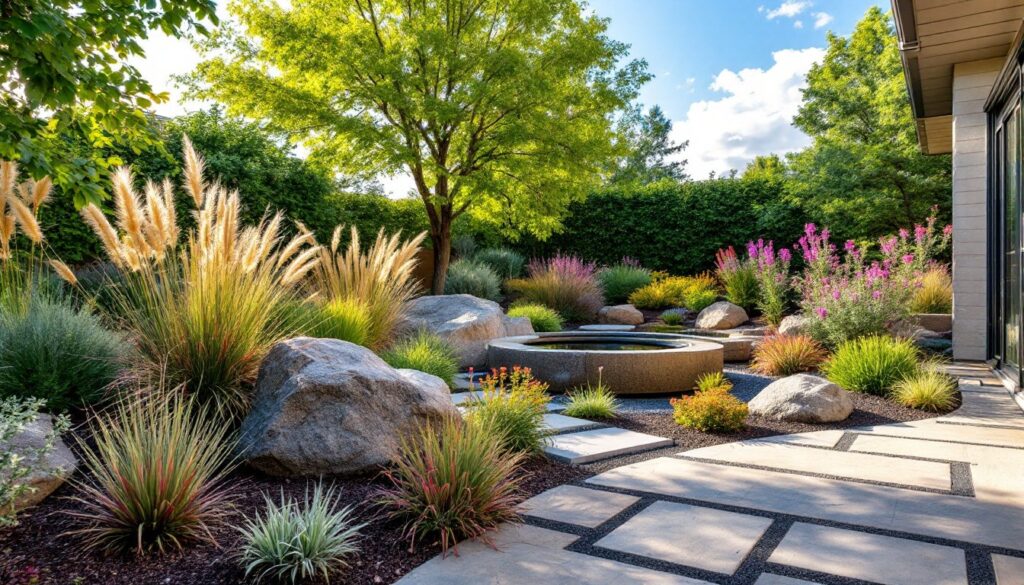
Hardscape, patios, paths, boulders, and walls, reduces the amount of turf and planting bed you need to maintain while adding visual structure. A well-placed focal point draws the eye and makes your xeriscape feel intentional rather than sparse.
Consider a large specimen boulder, a low stone retaining wall, or a gravel pathway lined with native shrubs. These elements don’t require water, add texture, and work year-round. Permeable hardscape materials like decomposed granite, flagstone, or porous pavers allow rainfall to soak through rather than runoff, improving soil moisture for nearby plants. When laying gravel pathways, use weed fabric underneath to reduce maintenance, pulled fabric over unprepared soil will fail within a season.
Outdoor Patio Design: Transform your backyard by anchoring hardscape features with plant beds. A small seating area surrounded by ornamental grasses and low shrubs becomes a retreat without constant upkeep. Patio Landscaping Ideas: Transform Your Outdoor Space often combine hardscaping and xeriscape principles effectively. Water features like small fountains or bird baths can be incorporated, they use recirculated water, not fresh irrigation, and add visual and auditory interest without waste.
Water-Wise Irrigation And Mulching Strategies
Even in a xeriscape, some irrigation may be needed during establishment or in extreme heat. The key is applying water efficiently where it counts.
Drip irrigation delivers water directly to the soil near plant roots, reducing evaporation and runoff compared to overhead sprinklers. A drip system uses 50 percent less water than traditional sprinkler heads while keeping foliage dry (reducing fungal disease). Install drip lines on a timer set to run early morning or evening: never water during midday heat when most evaporates. For large areas, soaker hoses or drip tubing can be arranged in loops around planting beds, simple to install, no trenching required.
Mulch is your second line of defense. A 2- to 3-inch layer of wood chips, shredded bark, or compost around plants moderates soil temperature, suppresses weeds, and retains moisture. Keep mulch a few inches away from tree trunks and shrub stems to prevent rot and pest issues. In sandy soils, add compost or aged manure before applying mulch to improve water-holding capacity. Annual soil testing through your extension office costs under $30 and reveals what amendments your beds actually need.
Avoid over-watering established plantings. Once trees and shrubs are in the ground for a season, most low-water species need supplemental water only during extended dry periods. Test soil moisture by digging 3 inches down, if it’s moist, don’t water. Overwatering kills more xeriscape plants than drought does.
Designing Your Xeriscape Layout For Maximum Impact
A strong layout maximizes curb appeal and functionality without fighting against your site conditions.
Start by observing your yard for one full season if possible. Note which areas stay wet, which dry out quickly, where shade lingers, and where the afternoon sun beats down. Cluster plants with similar water needs together, create a “hydrozones” so you’re not watering drought-tolerant plants alongside moisture-lovers. Place the thirstiest plants near water sources (gutters, downspouts) and the driest-tolerant species at the edges or in full sun.
For front yard xeriscape landscaping, group plantings in odd numbers (three or five) and vary height and texture. A tall ornamental grass anchored by a low succulent and medium shrub looks composed and intentional. Avoid a scattered, spotty appearance by creating beds with clear borders, whether that’s a hardscape edge, mulch, or ground-hugging plants like creeping thyme.
Landscaping Ideas for the side and back of your house benefit from the same principles. Shed Landscaping Ideas: Transform Your Backyard into a cohesive space by screening utility areas with tall shrubs or grasses while maintaining clear sightlines from main viewpoints. Sketch your plan on graph paper or use a free tool: measure existing features and note the footprint of proposed plants at maturity. This prevents crowding and makes material estimates straightforward.
Remember: xeriscape doesn’t mean no color or seasonal interest. Choose plants that bloom at different times, spring bulbs, summer wildflowers, fall ornamental grasses, and winter foliage plants ensure your yard stays visually interesting. Gardening guides from reputable sources and home improvement resources offer region-specific plant lists and design inspiration. Your local native plant society or horticultural extension is the single best resource for species selection and establishment advice tailored to your exact location.
Conclusion
A xeriscape backyard isn’t a sacrifice, it’s a smart investment in a landscape that works with nature rather than against it. By selecting adapted plants, installing efficient irrigation, adding hardscape focal points, and managing soil and mulch, you’ll create a yard that’s beautiful, functional, and genuinely low-maintenance. Start small if you’re new to xeriscaping: convert one bed this season, expand next year. Watch your water bill drop and your free time increase. That’s the real oasis.